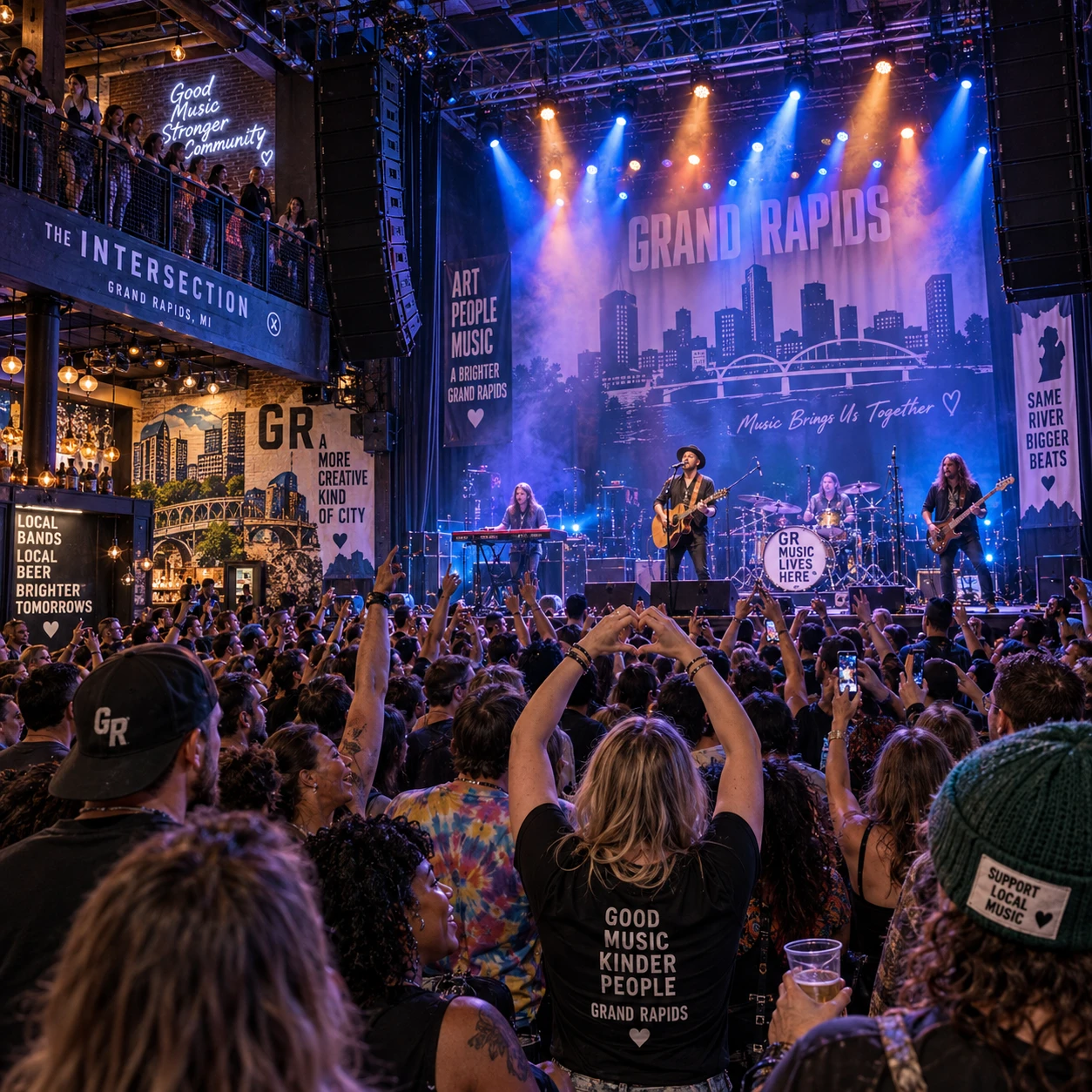
How to Book a Show at a Grand Rapids Music Venue: A Band’s Perspective
Booking a show at a Grand Rapids music venue starts with a good fit and a clear, prepared inquiry. From the band’s side, the process is less about sending the same pitch everywhere and more about showing a venue booker why your act suits that room, its audience, and its calendar.
There is no guaranteed formula: venues have different schedules, formats, and booking processes. A thoughtful approach helps the booker assess your band quickly and gives you a stronger foundation for a good show, whether you are an emerging local act or an established group.
Research venues that fit your band
Choose Grand Rapids music venues by matching the room’s style, capacity, audience, and booking process to your band. A relevant fit makes your inquiry more credible and gives the show a better chance of connecting with the venue’s crowd.
Start with the venue’s official website and social channels. Look at recent and upcoming events, not just the room’s name or size. Does the calendar feature original bands, touring acts, DJs, acoustic sets, or a mix? Do the genres and typical bill resemble what you play? A venue’s show calendar is a practical guide to its programming, though it cannot tell you every detail of its current needs.
Consider capacity and audience honestly. A band that can draw 30 engaged listeners may be a strong fit for an intimate room, while a larger venue may expect a more established draw or a particular kind of event. Ask whether the venue works with local openers, co-bills, or promoter-led shows. Check how it handles submissions, too: some venues provide a booking form or designated email, while others list a specific contact.
- Compare the venue’s recent lineup with your genre and performance style.
- Check its stated capacity, age policy, accessibility information, and event format.
- Note the preferred booking method and any requested materials.
- Identify a few realistic dates or calendar openings rather than asking for any night.
Do not assume that a venue’s public calendar shows every available date. Verify the process and current details directly before making plans.
Prepare a clear, professional booking pitch
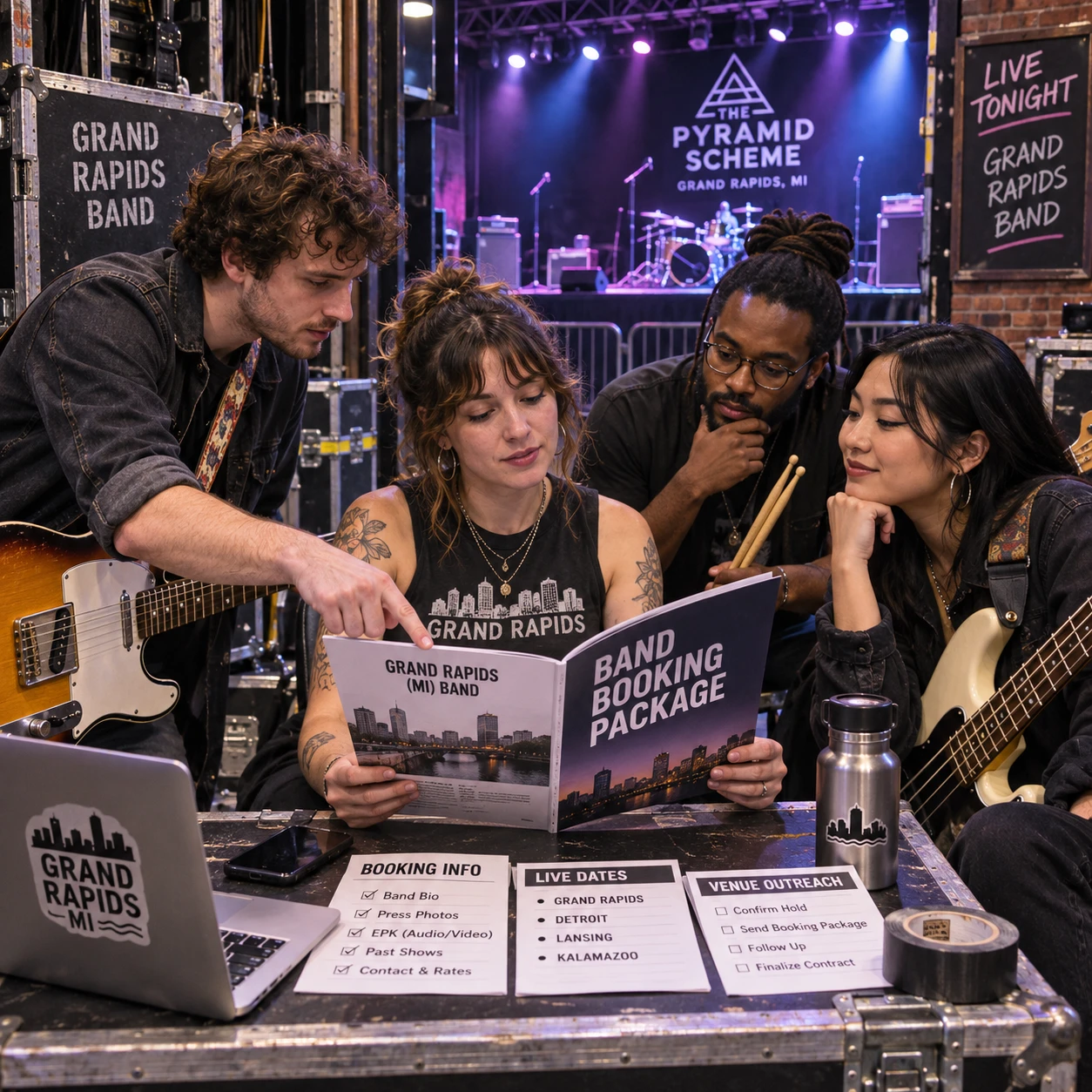
Prepare a concise booking inquiry with your music, a strong live performance video, an electronic press kit (EPK), lineup details, and realistic date preferences. The goal is to make it easy for a venue booker to understand what your band sounds like and how it could fit a bill.
Your EPK can be a simple, well-organized page or document. Include a short band bio, genre or style description, recent music links, a live video, a few quality photos, and contact information for the person handling bookings. Add credible details that help a decision, such as recent local shows or a relevant support slot. Avoid inflated claims about your draw; clear, accurate information builds more trust than a long list of adjectives.
Choose a live video that shows the band performing together, with usable sound and enough footage to convey stage presence. A polished studio recording helps a booker hear the songs, but it does not answer the same question as a live clip. If you have only one video, use a representative performance rather than a heavily edited montage.
Make your preferred dates specific but flexible. Include the proposed set length and lineup, and explain whether you are seeking a full-band slot, an opener position, or a co-bill. If you are still building your audience, say so plainly and suggest a practical way to contribute to the night, such as sharing the bill with a compatible local act.
Keep the materials easy to open on a phone. Use direct links, label them clearly, and avoid attachments that are large or difficult to preview. The best pitch is brief enough to scan and complete enough to assess.
Contact the right person and follow up thoughtfully
Send your booking inquiry through the venue’s stated channel and address it to the appropriate venue booker when that information is available. Keep the first message brief, specific, and courteous, then follow up once if you have not heard back.
A useful email subject line names the band and purpose, such as “Booking inquiry: [Band Name] — fall dates.” In the message, introduce the act, explain why you chose that venue, share the EPK and live video, and propose a small range of dates. Mention relevant local connections or a possible bill only when they are real and useful.
For example, a band might explain that it plays energetic indie rock, recently performed a well-attended local release show, and would fit a bill with two similar Grand Rapids acts. That gives the booker context without claiming a guaranteed ticket count or demanding a particular night.
Follow the venue’s instructions even if you know someone who works there. Avoid sending the same pitch repeatedly through email, social media, and multiple staff members. If the venue gives no reply timeframe, wait around one to two weeks before sending one short follow-up that includes the original request and asks whether the materials reached the right person. Booking decisions can take time, and silence is not confirmation.
Confirm the details before announcing the show
Before announcing a show, get the essential details in writing: date, lineup, set length, schedule, ticketing, promotion expectations, and technical arrangements. Clear confirmation prevents misunderstandings for both the band and the venue.
Ask who is on the bill and who will coordinate the event. Confirm your performance time and how long you are expected to play; a set may be shorter when several bands share the night. Check load-in, soundcheck, doors, and curfew, and find out whether the venue provides a backline or expects each act to bring its own equipment.
Clarify the deal before committing. Ask how payment works, whether there is a door split or other arrangement, how tickets are sold, and whether there are any agreed sales or promotional expectations. Terms vary by venue and event, so do not rely on assumptions or verbal shorthand. Keep a written record of the agreed details.
- Show format: lineup, set order, set length, and any shared equipment.
- Schedule: load-in, soundcheck, doors, performance time, and curfew.
- Production: stage plot, input list, microphones, monitors, and backline.
- Business: ticket price, ticket link, settlement method, and any promotional commitments.
Send a simple stage plot and input list if requested. If your setup changes, tell the venue promptly. A small adjustment is usually manageable when the production team knows about it before show day.
Promote the show and deliver on the night
Promote the show through your own channels, communicate with the venue, and arrive ready to perform at the agreed time. Reliable promotion and stage readiness help the whole bill, while the venue remains responsible for its own event operations.
Once the event is confirmed, share the venue’s official ticket link and approved artwork. Post clear information: date, room, doors or showtime, age restrictions if applicable, and the other acts. Ask bandmates to coordinate outreach rather than posting identical messages repeatedly. Direct invitations to people who genuinely like your music are often more useful than a high volume of untargeted posts.
Promotion is a shared effort, but be precise about what you can deliver. Do not promise a ticket count you cannot control. If the venue has specific ticket promotion guidelines, follow them and ask questions early. A quick check-in before the event can confirm whether the lineup, links, or schedule has changed.
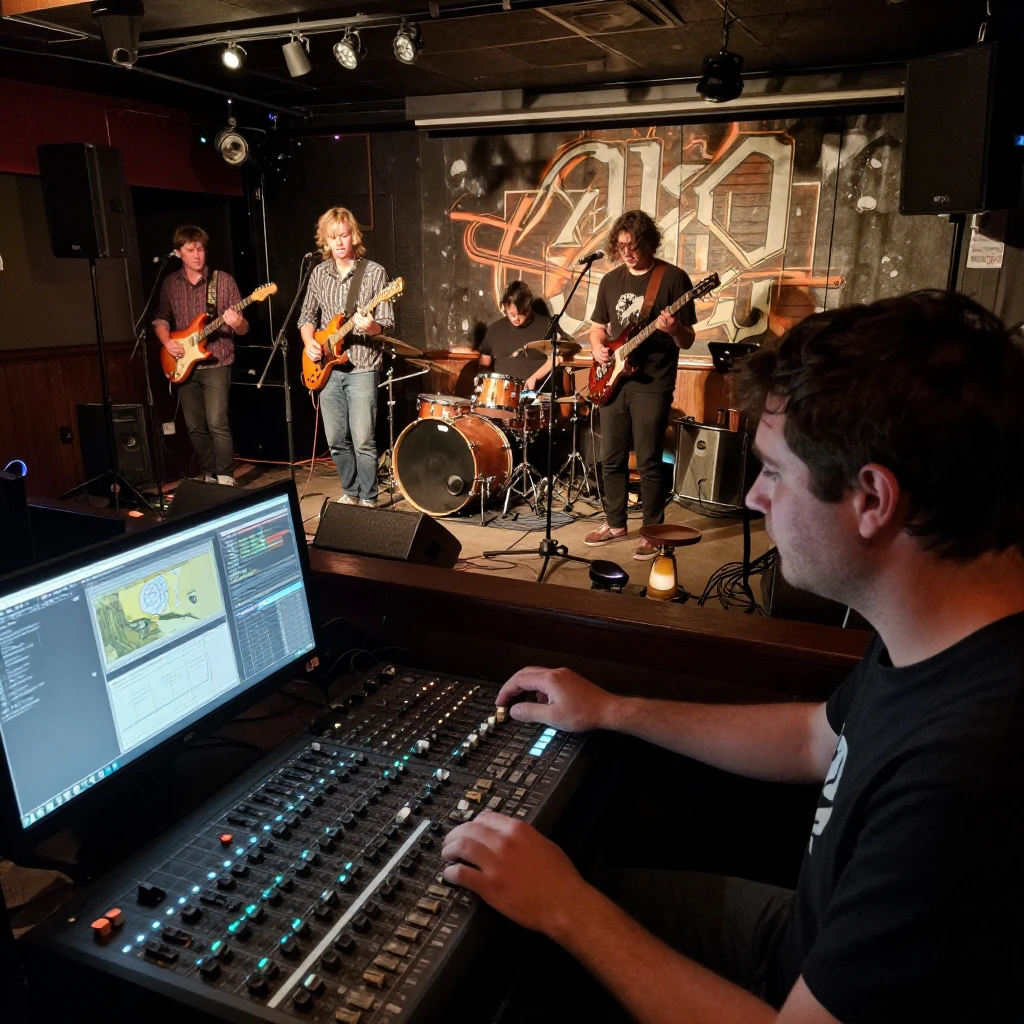
On show day, arrive with enough time to load in, set up, and follow the sound engineer’s instructions. Keep your set within the agreed length, bring the gear and spare essentials your setup requires, and communicate any problem quickly. Respect the room, staff, other bands, and audience. A focused changeover matters, especially when the bill is tight.
Follow up and build the relationship
After the show, thank the venue and share any useful information without turning the follow-up into a sales pitch. Professional communication helps a venue remember your band when a future bill suits your sound.
Send a brief thank-you to the booker or event contact within a few days. If you have relevant photos, a live clip, or a reliable attendance figure, offer to share it. Avoid guessing at the crowd size or presenting social engagement as ticket sales. If the night went well, say what worked; if a problem came up, describe it calmly and focus on what you would do differently next time.
Stay in touch by following the venue’s submission process and reaching out only when you have a useful reason, such as a new release, an appropriate date window, or a strong bill idea. The local music scene runs on relationships, but that does not mean a booker owes a response or a repeat booking. Make each interaction easy to handle: be organized, meet your commitments, and respect the venue’s decisions.
Frequently asked questions
What should a band include in a booking inquiry?
Include a short introduction, genre or style, music links, a representative live performance video, EPK, lineup and set-length information, preferred dates, and a reliable contact. Add relevant local show history if it helps the booker assess the fit.
How far in advance should a band contact a venue?
There is no single lead time for every Grand Rapids music venue. Check the venue’s booking guidance and calendar, and contact it early enough to offer several workable dates. For a particular season or touring bill, begin sooner; for a local slot, follow the venue’s stated process.
Should an emerging band have an EPK?
Yes, but it can be simple. A single page with music, one strong live video, a short bio, photos, lineup details, and contact information is enough to present a new band professionally. Keep it current and do not wait for a major release to make one.
How can a band follow up without being pushy?
Wait about one to two weeks unless the venue gives a different timeframe, then send one polite message referring to your original inquiry. If there is no response, move on and revisit the venue when you have a new, relevant reason to reach out.