Rock, Hip-Hop, and Electronic Music in Greece: A Live Scene Deep Dive
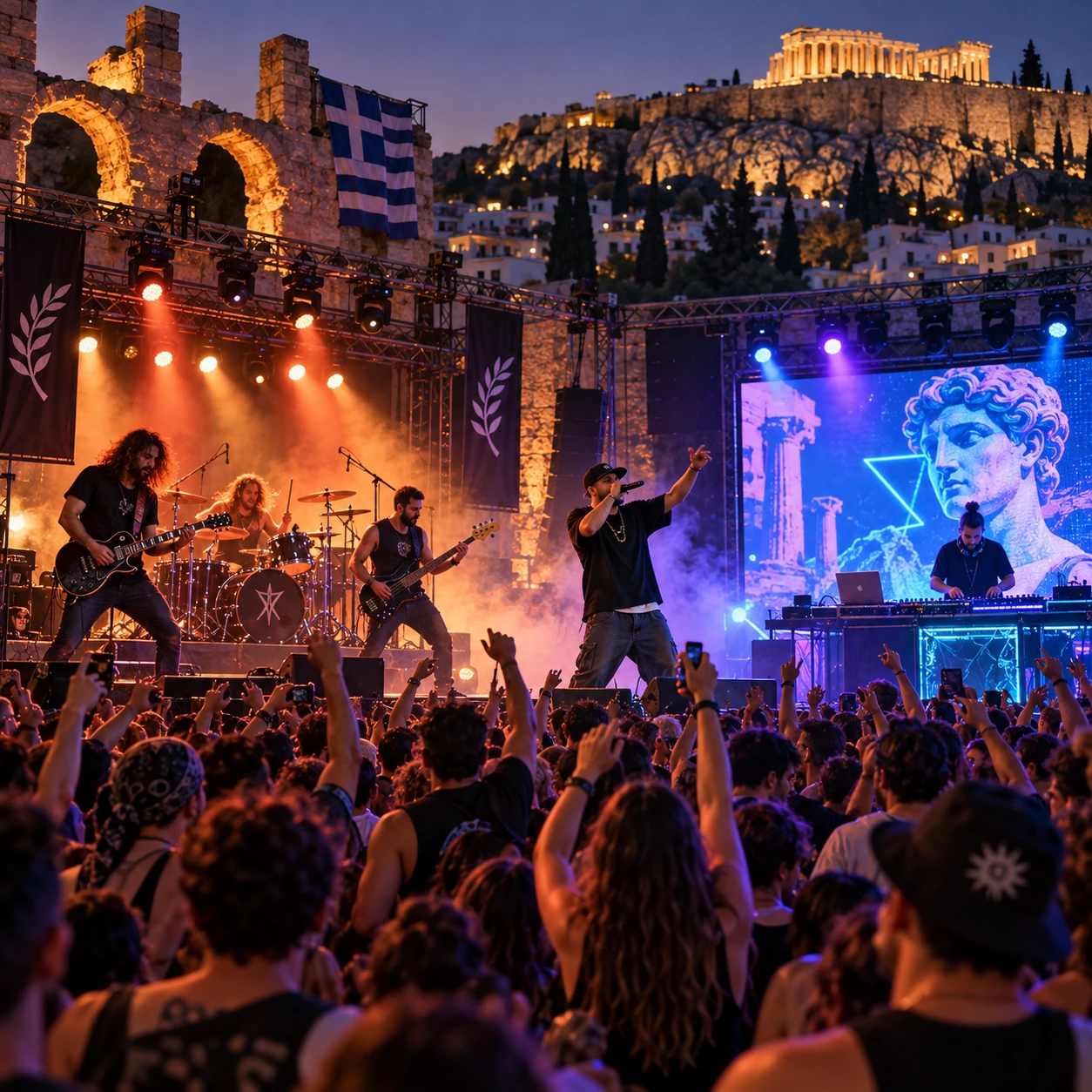
Greece’s live music scene brings rock, hip-hop, and electronic music into intimate clubs, concert halls, outdoor festivals, and late-night dance spaces. In Athens and Thessaloniki, as elsewhere in the country, the experience depends as much on the room and the crowd as on the genre: a guitar-led set invites one kind of attention, while a rap performance or club night asks for another.
There is no single sound that defines Greek live music. Local artists and emerging acts work across styles, and concertgoers can find very different evenings under the same broad label of a gig. Knowing what each format offers makes it easier to choose a show, discover new performers, and enjoy the scene on its own terms.
Three genres, three distinct live experiences
Rock, Greek hip-hop, and electronic music offer distinct live experiences shaped by instrumentation, performance style, and audience participation. The simplest guide is to ask whether you want a band-focused performance, a lyric-driven connection, or a continuous dance-floor atmosphere.
Rock music in Greece often centers on the interaction between musicians: vocals, guitars, bass, and drums build a sound that can shift from restrained passages to a loud, energetic finish. The audience may watch the performers closely, sing along, or move near the stage. The room’s acoustics and the distance between the band and crowd matter.
Greek hip-hop places the voice and rhythm at the center. A rapper may perform with a DJ, backing tracks, or a live ensemble, and the set often depends on clear vocals and the crowd’s response. Listeners may connect through lyrics, call-and-response moments, and a shared sense of community.
Electronic events range from a DJ mixing recorded tracks to a live set built with synthesizers, drum machines, samplers, or computers. Some invite close listening; others are designed for sustained dancing. Before buying a ticket, check the event description: “electronic” alone does not tell you whether to expect a concert-style performance or a club night.
Rock in Greece: bands, energy, and the stage
Rock concerts in Greece offer a direct, physical connection between a band and its audience, with the stage setup and sound system shaping the intensity. A small venue can make the performance feel immediate; a larger concert or festival gives the music more room to build.
The format rewards close attention to the players. Guitar tone, drum dynamics, and the singer’s delivery can change from one song to the next, making a live set feel different from a recorded album. Local venues also give emerging Greek artists a place to test new material and build an audience alongside established performers.
For concertgoers, practical details make a difference. Check whether tickets are seated or standing, when doors open, and whether the event lists opening acts. If you want to hear the band clearly, arriving early can help you choose a spot with a good view and a balanced sound. If you prefer the crowd’s energy, standing closer to the front may suit you, though it can be louder and more crowded.
Rock’s appeal is not limited to one style or generation. A bill may bring together different approaches, from alternative and indie sounds to heavier guitar music. Treat the lineup as a chance to hear more than the headliner; a local opening act may become the most rewarding discovery of the night.
Greek hip-hop: voice, rhythm, and community
Greek hip-hop shows bring lyrics, rhythm, and audience response to the foreground. The live experience can feel personal and communal at once, especially when listeners know the words and respond directly to the performer.
The genre includes different voices and production choices, so no single description fits every act. Some performances emphasize dense writing and a close connection between rapper and crowd; others lean on bass, movement, and a high-energy stage presence. A DJ may handle the transitions, while backing vocalists or musicians can add another layer to the arrangement.
Language is part of the experience. Greek-language lyrics may carry local references and social perspectives that listeners familiar with the culture recognize immediately. Visitors who do not understand Greek can still follow the flow, delivery, and crowd interaction, though they may miss some of the lyrical detail. Listening to a few tracks before the show can make the set easier to enter.
Hip-hop events also show how a live music venue can act as a meeting point. Fans come not only for individual songs but for a shared scene, with local audiences supporting performers and one another. Respect the room’s atmosphere: some crowds focus on the stage, while others make space for dancing and movement.
Electronic music: from club nights to live sets
Electronic music in Greece can mean a DJ-led club night, a live performance using electronic instruments, or a hybrid show that combines both. The key difference is whether the performer is primarily mixing tracks, creating and altering sounds live, or doing some of each.
At a club night, a DJ selects and blends recorded music over an extended set. The emphasis is often on flow: tempo, transitions, and how the dance floor responds. You may arrive after the set begins or stay for only part of it, depending on the event schedule and venue rules.
A live electronic set usually involves more visible real-time production. An artist may use synthesizers, samplers, drum machines, controllers, or a computer to perform and reshape material. That does not always mean every sound is created from scratch onstage; formats vary, so look for descriptions such as “live set,” “DJ set,” or “hybrid performance” when deciding what you want to hear.
Settings matter. A club can support long, uninterrupted dancing, while a concert venue may prioritize sightlines and a focused stage presentation. Outdoor festivals provide space and a broader program, but weather, travel, and set times affect the experience. Check the timetable and transport options before committing to a late event.
The venues and audiences connecting the scenes
Live music venues, promoters, and local audiences connect Greece’s rock, hip-hop, and electronic scenes by giving artists places to perform and listeners ways to find them. Athens and Thessaloniki offer a range of spaces, while events in other cities and towns add further opportunities depending on the season and local programming.
A venue is part of the show, not a neutral container. A compact room puts performers close to the crowd, but can feel crowded and amplify sound. A larger hall gives audiences more space and production options, though the performance may feel less intimate. Outdoor festivals offer variety across stages, with trade-offs in travel time, schedule changes, and sound bleed between performances.
Promoters and venue calendars are useful starting points for discovering concerts and club nights. Follow local venues, artists, and event organizers on their official channels, then verify the date, location, age restrictions, door time, and ticket terms on the event’s own page. Festival lineups can also introduce you to several genres in one outing, though a packed schedule may mean choosing between overlapping sets.
- For a close performance: look for smaller rooms and early arrival times.
- For genre discovery: explore mixed bills and festival programs.
- For dancing: check whether the event is a concert, DJ night, or hybrid set.
- For a more comfortable visit: review access details, seating, and transport before you go.
What to look for in Greece’s evolving music scene
To explore Greece’s evolving music scene, follow venue calendars, local artists, promoters, and festival announcements, then choose events by format as well as genre. This approach helps you find emerging Greek acts without assuming that every rock show, rap concert, or electronic night will feel the same.
Start with a practical filter: decide whether you want to listen closely, sing along, or dance; check the lineup and performance format; then consider the venue, schedule, and journey home. For an unfamiliar artist, sample a few tracks before the event, but leave room for surprise. A live arrangement can sound markedly different from a studio recording.
It is also worth crossing genre boundaries. A mixed bill may pair a rock band with a hip-hop act, or an electronic performer may bring a concert audience into a more dance-oriented setting. These combinations can broaden your sense of what a live music night in Greece can be, though the changeovers and crowd expectations may vary from act to act.
Approach each event as a specific meeting between artist, venue, and audience. That is a more reliable guide than broad claims about which genre is “biggest.” The most satisfying show may be a familiar sound in a new room, or an emerging artist you happened to catch before their name became familiar.
Frequently asked questions
What kinds of venues host rock, hip-hop, and electronic shows in Greece?
These events take place in live music clubs, concert halls, cultural spaces, outdoor festival sites, and nightclubs. The suitable setting depends on the performance: rock and rap often use stage-focused rooms, while DJ nights commonly take place in clubs, though formats overlap.
How does a live electronic set differ from a club DJ night?
A live electronic set usually involves an artist performing or manipulating sounds with electronic instruments and production tools in real time. A club DJ night centers on selecting and mixing recorded tracks, although some performers combine DJing with live elements.
Where can listeners discover emerging Greek artists?
Check official calendars and social channels for venues, promoters, festivals, and the artists themselves. Mixed bills and opening slots are useful ways to find emerging acts. Confirm event information with the organizer before traveling or purchasing a ticket.
Are rock, hip-hop, and electronic events held in the same venues?
Sometimes. Many venues program more than one genre, but each event may use the room differently and attract a different crowd. Read the event listing for the format, schedule, and practical details rather than assuming a venue has one fixed musical identity.